








- Main
- FAQ
- Tariffs, tokens, and payment
- How do tokens work?
How do tokens work?
- General questions about indexing
- How 2index.ninja works
- Indexing of website pages
- Backlink indexing
- Checking Google indexing
- Tariffs, tokens, and payment
- API and bulk work
- Guarantees, deadlines and results
- Safety and restrictions
- Technical questions
-
Other questions
- How to use competitor tracking in your backlink acquisition strategy?
- How important is content when attracting backlinks?
- How to ensure good page loading speed for better indexing and optimization?
- What page optimization recommendations will help improve their indexing?
- How to check which pages have been indexed by a search engine?
- How does internal linking help optimize for Yandex indexing?
- How does fast indexing affect search results positions?
- How can you monitor the quality of external links to your site?
- What methods can be used to find potential backlink sources?
- What tools are available for backlink monitoring?
- How to evaluate the quality of backlinks?
- How does optimizing for fast website loading speed affect indexing in Yandex?
- How does using a robots.txt file affect Google indexing?
- What specific optimization recommendations can be applied for better indexing in Yandex?
- How to evaluate the domain authority and page authority of another web resource?
- How do you check which pages of your mobile site are indexed by Google?
- How to choose the right keywords for a specific page?
- How do you take page loading speed into account when optimizing for fast indexing?
- How does content length affect page indexing and ranking?
- What are the benefits of website page indexing services?
- What is a canonical URL and how is it used in SEO?
- What are the basic steps to improve Google indexing?
- How to make sure your website is mobile-friendly for Google?
- How to create and submit a sitemap to Google?
- How to speed up the indexing process of new website pages?
- How do social signals affect SEO?
- How to choose the right keywords for your website?
- What mistakes should you avoid when attracting backlinks?
- How can content marketing be used in a backlink acquisition strategy?
- What metrics should you track when evaluating the effectiveness of your backlink acquisition strategy?
- What is the role of anchor texts in backlink acquisition strategy?
- What types of backlinks exist?
- What are the benefits of attracting backlinks?
- What roles do social media play in SEO?
- What are long-tail keywords and how are they used in SEO?
- What content is considered quality from an SEO perspective?
- How to measure SEO effectiveness and what metrics should you track?
- What is organic search?
- What is a Sitemap and How Does it Help SEO?
- What is crawling and how does it relate to indexing?
- What SEO analysis tools can be used?
- What are backlinks (external links) and how do they affect SEO?
- What factors influence website loading speed and why is it important for SEO?
- What are keywords in SEO?
- What are meta tags and how do they affect SEO?
- What is SEO (Search Engine Optimization)?
- What is Yandex.Webmaster?
- What is Google Search Console?
- What is an active link?
- How does a search engine find new website pages?
- How to check the result
- How long does indexing take?
- How does this work
- How much will it cost?
- Will all pages and links be indexed?
2index.ninja uses an internal token system , which serves as a unit of account for transactions within the service. Tokens are not cryptocurrency and have no external value—they are used exclusively to pay for actions within the platform, such as submitting a URL for indexing or checking indexing.
Each action in the service consumes a certain number of tokens. For example, sending a single URL may consume one token, while checking indexation may use a separate rate. The specific rate depends on the selected plan and account terms.
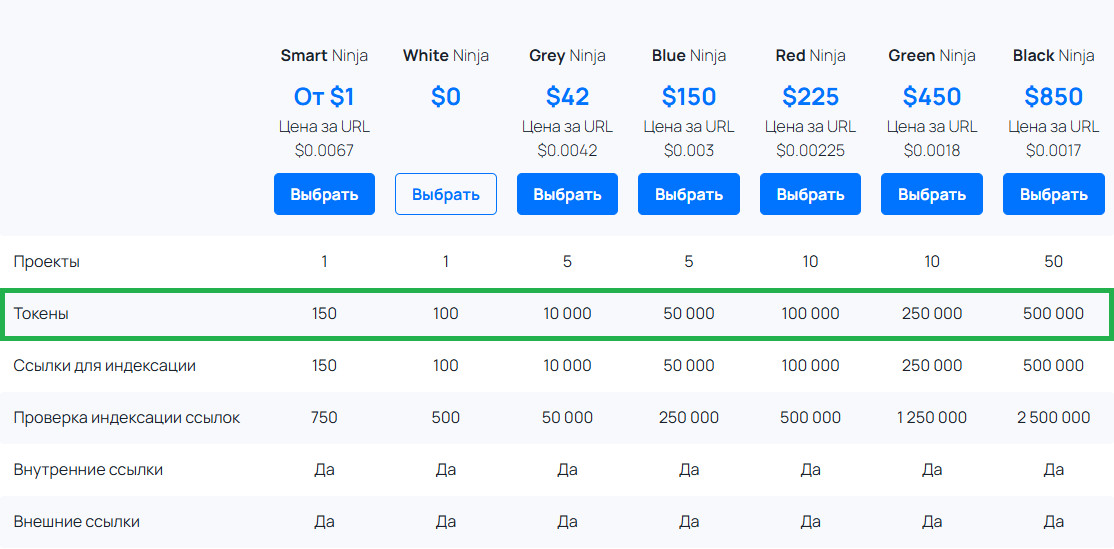
The token system allows for flexible load balancing between different types of tasks. Users can use tokens for both bulk page submissions and checking the status of already processed URLs, without separating these processes into separate payment systems.
Your token balance is displayed in your personal account and is updated automatically after each transaction. Additional tokens can be purchased or received as part of your subscription plan.
It's important to keep in mind that the cost and consumption of tokens depend on the current terms of the service. Therefore, the exact debit rules are always determined by the tariff, not by a fixed universal scheme.
Ultimately, tokens are an internal payment mechanism that simplifies mass URL management and allows for scaling indexing and verification processes without requiring per-operation fees.