








- Main
- FAQ
- Indexing of website pages
- Is it possible to index an online store?
Is it possible to index an online store?
- General questions about indexing
- How 2index.ninja works
- Indexing of website pages
- Backlink indexing
- Checking Google indexing
- Tariffs, tokens, and payment
- API and bulk work
- Guarantees, deadlines and results
- Safety and restrictions
- Technical questions
-
Other questions
- How to use competitor tracking in your backlink acquisition strategy?
- How important is content when attracting backlinks?
- How to ensure good page loading speed for better indexing and optimization?
- What page optimization recommendations will help improve their indexing?
- How to check which pages have been indexed by a search engine?
- How does internal linking help optimize for Yandex indexing?
- How does fast indexing affect search results positions?
- How can you monitor the quality of external links to your site?
- What methods can be used to find potential backlink sources?
- What tools are available for backlink monitoring?
- How to evaluate the quality of backlinks?
- How does optimizing for fast website loading speed affect indexing in Yandex?
- How does using a robots.txt file affect Google indexing?
- What specific optimization recommendations can be applied for better indexing in Yandex?
- How to evaluate the domain authority and page authority of another web resource?
- How do you check which pages of your mobile site are indexed by Google?
- How to choose the right keywords for a specific page?
- How do you take page loading speed into account when optimizing for fast indexing?
- How does content length affect page indexing and ranking?
- What are the benefits of website page indexing services?
- What is a canonical URL and how is it used in SEO?
- What are the basic steps to improve Google indexing?
- How to make sure your website is mobile-friendly for Google?
- How to create and submit a sitemap to Google?
- How to speed up the indexing process of new website pages?
- How do social signals affect SEO?
- How to choose the right keywords for your website?
- What mistakes should you avoid when attracting backlinks?
- How can content marketing be used in a backlink acquisition strategy?
- What metrics should you track when evaluating the effectiveness of your backlink acquisition strategy?
- What is the role of anchor texts in backlink acquisition strategy?
- What types of backlinks exist?
- What are the benefits of attracting backlinks?
- What roles do social media play in SEO?
- What are long-tail keywords and how are they used in SEO?
- What content is considered quality from an SEO perspective?
- How to measure SEO effectiveness and what metrics should you track?
- What is organic search?
- What is a Sitemap and How Does it Help SEO?
- What is crawling and how does it relate to indexing?
- What SEO analysis tools can be used?
- What are backlinks (external links) and how do they affect SEO?
- What factors influence website loading speed and why is it important for SEO?
- What are keywords in SEO?
- What are meta tags and how do they affect SEO?
- What is SEO (Search Engine Optimization)?
- What is Yandex.Webmaster?
- What is Google Search Console?
- What is an active link?
- How does a search engine find new website pages?
- How to check the result
- How long does indexing take?
- How does this work
- How much will it cost?
- Will all pages and links be indexed?
Yes, online stores are perfectly suitable for indexing , and in practice, this is one of the most common use cases for 2index.ninja. Such sites typically contain a large number of pages—product cards, categories, subcategories, filters, and landing pages—and because of this, their indexing is often uneven and subject to delays in search engines like Google and Yandex.
The main problem with online stores is scale. Even a relatively small e-commerce project can have hundreds or thousands of URLs, while large stores can have tens or hundreds of thousands of pages. Search engine crawlers require time and resources to traverse this entire volume, so some new or updated pages may not be indexed for a long time.
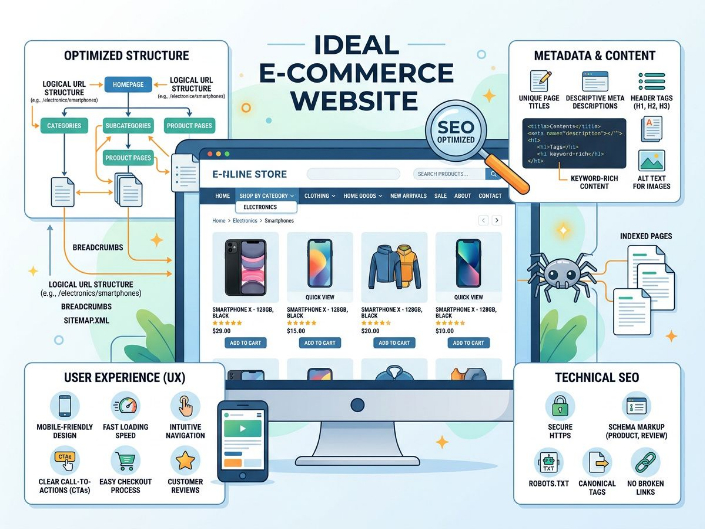
Product pages are particularly prone to delays. They may be technically accessible, but not immediately indexed due to weak internal linking, duplicate templates, or insufficient unique content. Category and filter pages may also be indexed unevenly, especially if the site structure is complex or contains many URL parameters.
Before submitting your online store's pages for indexing, it's important to ensure the site is properly prepared. First, check that the pages aren't blocked by robots.txt, don't contain the noindex meta tag, don't return server errors, and are accessible via a direct URL. It's also important to exclude duplicates and pages with automatically generated or weak content, as such URLs may not be indexed even after processing.
It's also worth considering that search engines evaluate not only technical accessibility but also the value of a page. If a product page doesn't contain a unique description, images, or useful information, its likelihood of being indexed may be lower, regardless of whether it was submitted through the service.
As a result, online stores can and should be indexed —especially new products, updated categories, and key landing pages. With proper site preparation, this helps speed up product appearance in search results and improve store visibility in organic search results.