








Information project "treatment of diseases"

Medical topics are among the most popular in search engines. Despite the obvious warning "about the dangers of self-medication" - numerous articles on the topic of treating various diseases can be very useful, provided, of course, that they are written by medical professionals.
For patients, such an information portal will help "decipher" complex explanations from doctors regarding a diagnosis or taking medications, and for the doctors themselves - to receive up-to-date information on new drugs, methods of treatment and diagnostics, to exchange experiences with colleagues around the world.
So, the requirements for a medical portal on the topic of treating diseases:
- high-quality professional texts;
- a large number of articles, if possible, covering a wide range of diagnoses.
And if everything is clear with the first requirement, then a large number of articles - they are also separate pages of the site - entails a problem. And the name of this problem is
Indexing of site pages by search engines
Why is this important?
It would seem that a visitor would go to your website with professionally written medical articles, quickly find the diagnosis or symptoms he needs thanks to the user-friendly interface, and the job is done. But no.
For such a scenario, you need to have a well-known website brand, at least at the level of The Lancet (a British medical journal that has been published since 1823, and now is perhaps the most famous medical website), which in the near future, let's say, is unlikely.

Most likely, the patient will look for symptoms, the name of the disease, names of drugs, etc. - in search engines (Google, Yandex, Bing), and they will show (or not) your site in their search results along with all your competitors.
But for this, as many pages of your site as possible must be indexed by the search engine.
In fact, this process is ongoing - you write and post articles, the robot finds them, if they are valuable from its point of view (and we remember that we write only professional articles on medical topics!) - they are sent for indexing, and after that the pages of your site begin to appear in search results.
But search engines are very inert - if you are not a mega-popular medical site with dozens of articles updated daily - then the process of indexing pages can take weeks or even months.
And this, naturally, reduces the efficiency and profitability of your site, if you look at it as a whole.
How to speed up the indexing of pages of a medical site?
Let's look at an example of a good, in principle, medical site with fairly qualified articles.
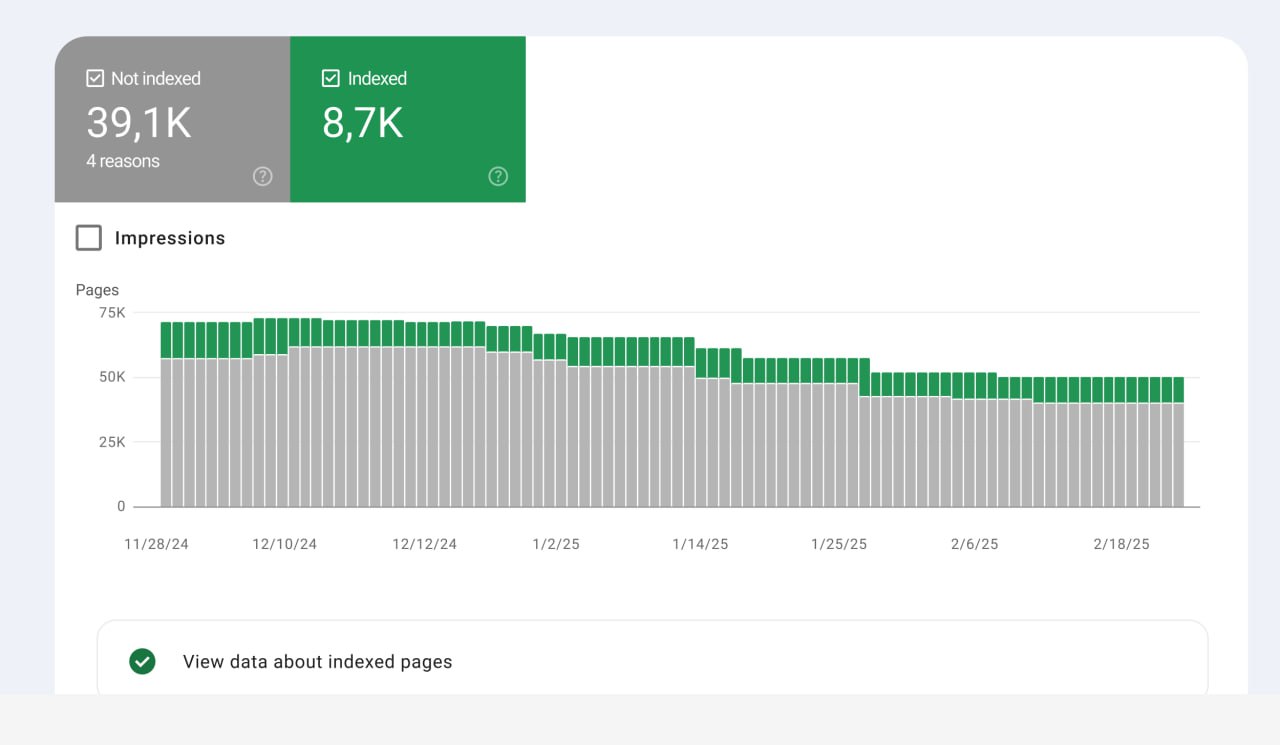
Enough articles have been written, but, as we can see, very few have made it into the Google index, and, what's worse, the number of even crawled (scanned, but not indexed) pages is decreasing. That is, the search engine "loses interest" in the site, your site "falls out of the index".
Where then will the indexed pages that will be shown in the search results come from?
The administration of the medical site decided to use the capabilities of the 2index.ninja service to speed up the indexing of pages.
Since the crawled list contains not only the pages of the articles themselves, but also a lot of auxiliary pages - tags, categories, pagination - it was decided to index the pages of the articles themselves, as those that contain useful text information.
Out of almost 40 thousand in the entire list, about 10 thousand pages were selected for priority processing.
Which 2index.ninja tariff is suitable for indexing 10,000 pages?
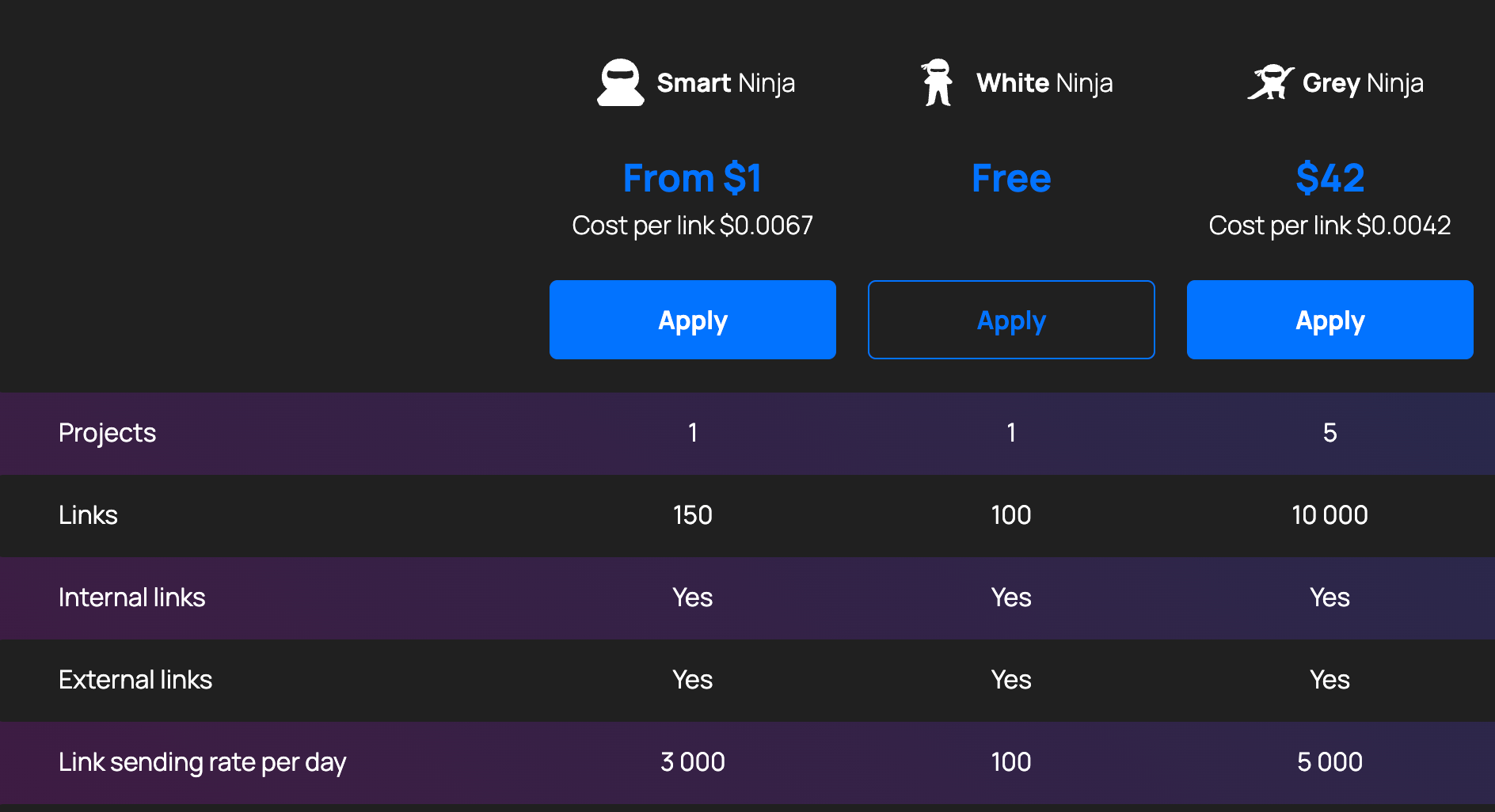
Obviously, this is GreyNinja for $42 with a price per link of $0.0042 (the next one is RedNinja for processing 100 thousand links for $225 - in this case it is already excessive).
According to the tariff, you can add 5000 links per day, which is what was done. After a while, we have the result:
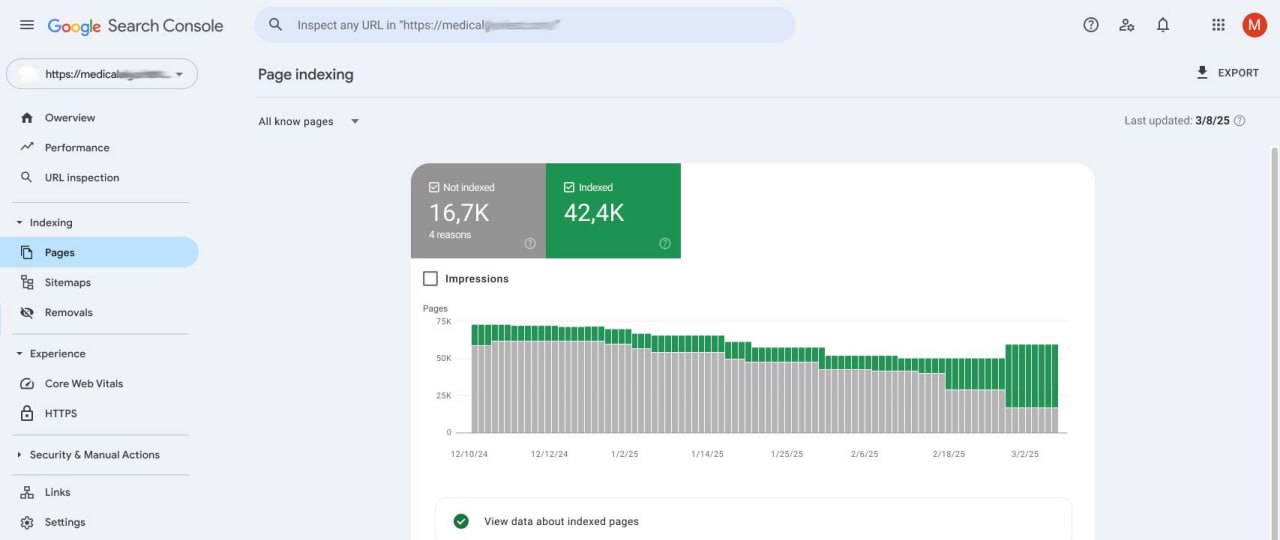
That is, the first stage indexed the links included in the crawled list - increasing the proportions in favor of the indexed, but at the second stage the system pulled up new links, thus increasing the total number of pages of the medical site processed by the search engine.
Results
Total: +34,000 pages, given that money was spent on indexing only 10,000 links ($42). Here, obviously, the fact that the site was quite competently designed played a role - with cross-links, correct placement of tags and definition of categories, etc. - that is, the pages indexed with the help of 2index.ninja pulled their "neighbors" along with them.
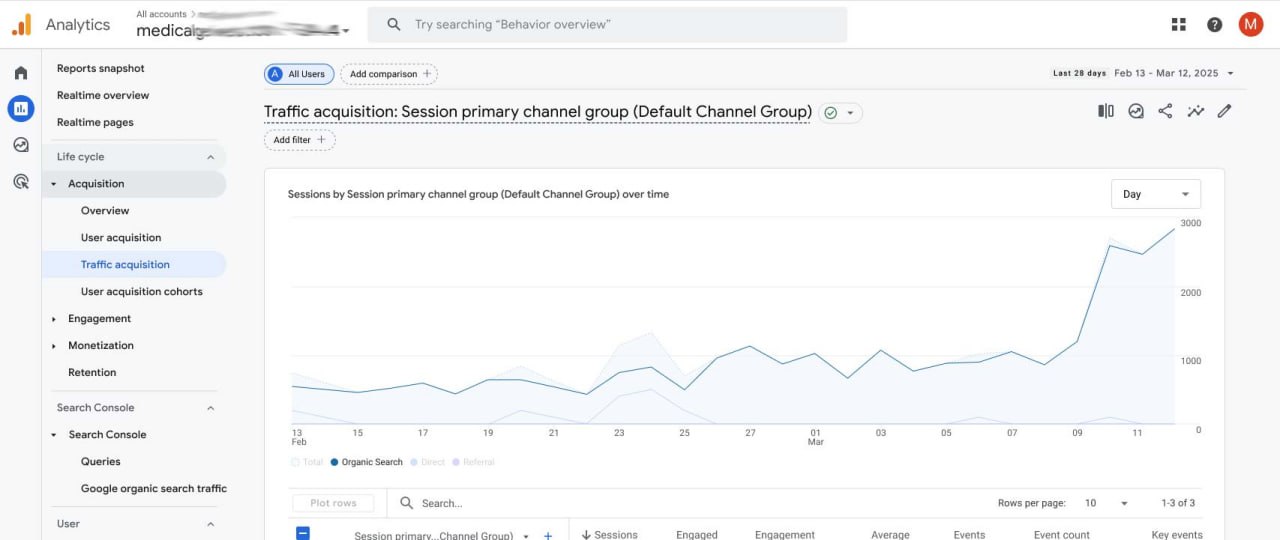
Obviously, such a sharp increase in indexed pages also entailed an increase in the number of queries for which the site began to be shown - and this, in turn, increased organic traffic to the site - for which, in fact, everything was started.
Conclusions
Obviously, in a rather complex industry - medicine - it is not enough to write a large number of even professionally impeccable articles - it is necessary that the corresponding pages of the medical site are still were called by requests in the search engine results, and there is only one way to do this - search engines must index the pages of the medical site, and as quickly as possible.
Then you can already hope for an increase in organic traffic - the most reliable and converting of all channels for attracting visitors to the site.
And for accelerating the indexing of pages of a medical information site, the 2index.ninja service is probably better suited than others, as shown in this example.