







What is cloaking and how can it save ad campaigns in affiliate marketing?

If you've ever run ads in a "gray" vertical—gambling, betting, Nutra, dating, or crypto—you've likely encountered the same problem: your account gets banned before the budget is even used up. The ad platform's moderator spots an offer that violates the platform's rules and blocks the campaign within minutes.
Cloaking is used in traffic arbitrage to solve this problem. Let's break down what it is, how it works, and how to set it up.
What is cloaking?
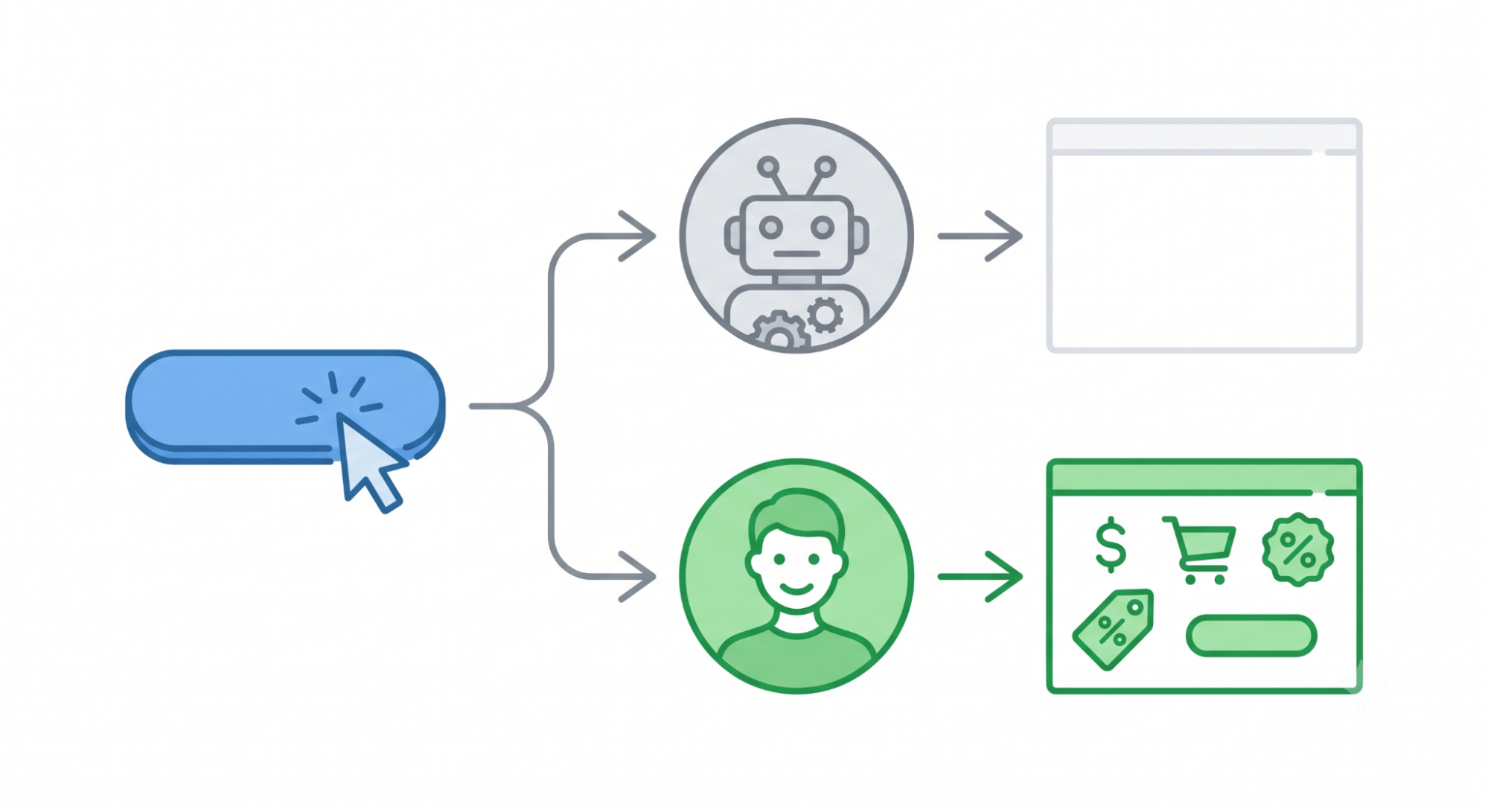
Cloaking is a technique where the same click on a link shows different content to different visitors.
The technology analyzes who exactly clicked on the link and divides the traffic into two streams:
The target user (the one the ad is targeted at) is directed to the Offer Page, which is the page with the actual offer.
A moderator, bot, scam detector, competitor, or any other "unwanted" visitor sees a White Page: a safe, completely white page that passes moderation without question.
From the advertising platform's perspective, everything looks clean: the ad leads to a harmless landing page. Meanwhile, real users from the target geo receive the exact offer you want to sell them.
By what criteria does the system distinguish “friends” from “foes”?
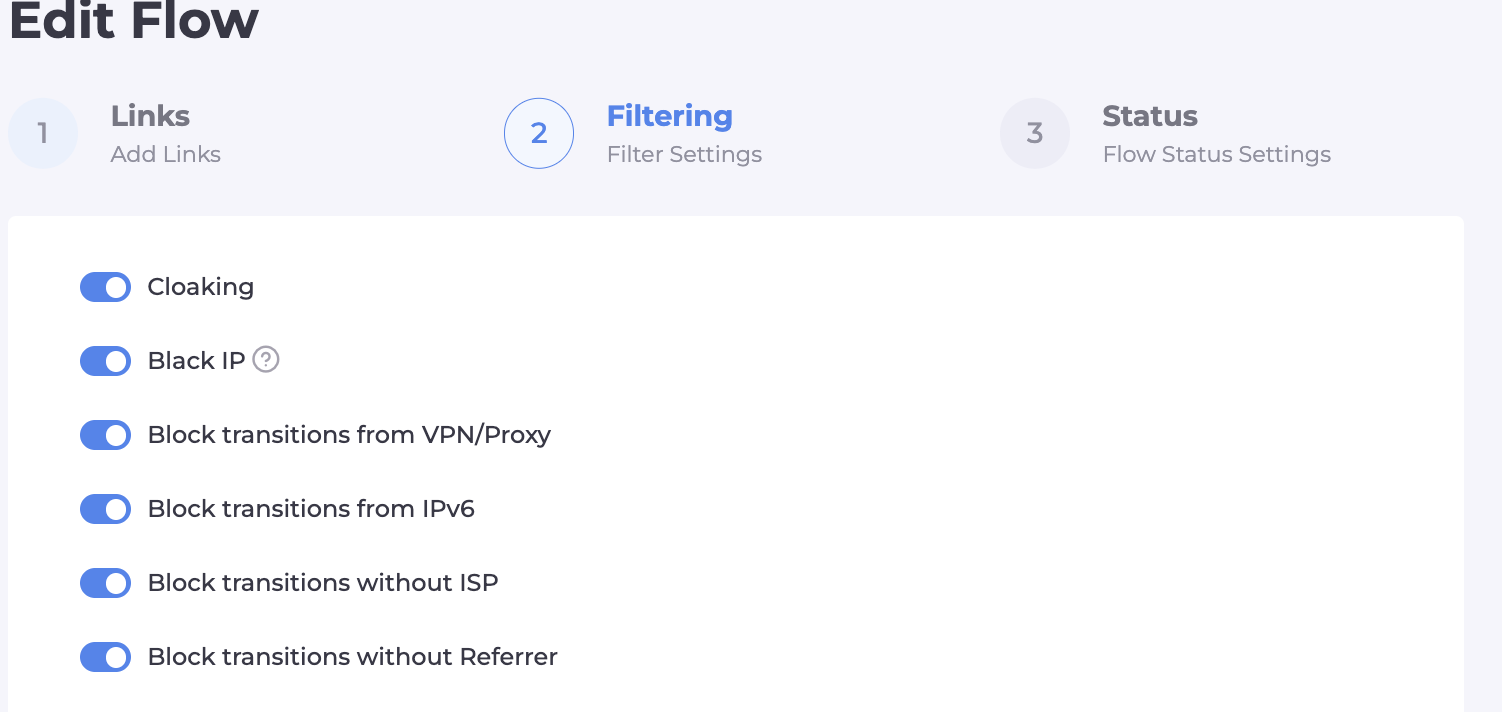
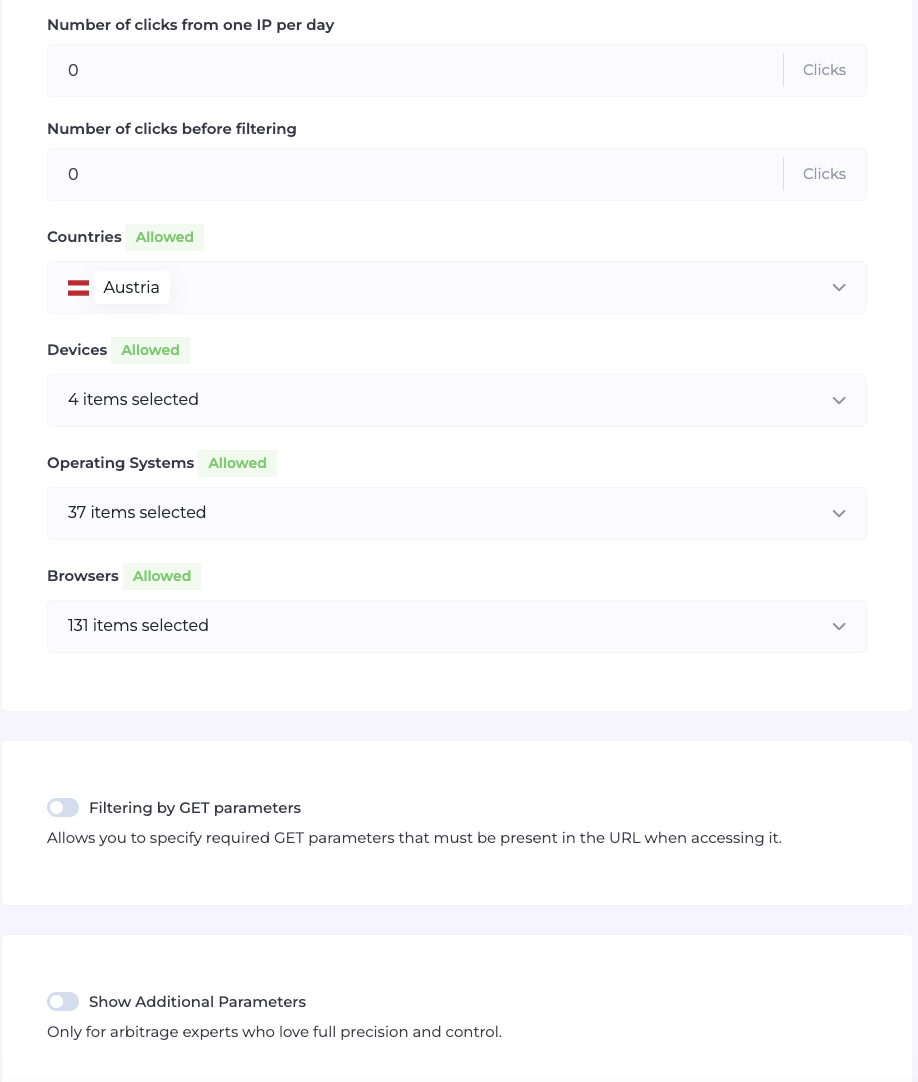
The decision on which page to show to whom is made based on a set of request parameters:
IP address and its reputation – whether it has been involved in spam or bot activity.
VPN / Proxy / data center – whether a real connection or an anonymizer is used.
ISP and ASN – who owns the IP: your home provider or the hosting company.
Geo, language, and time zone – do they match? (A mismatch is a common signal for moderators and the cloaker themselves.)
Device, OS, browser – does the profile match the typical user of the target audience?
Referrer and GET parameters – where exactly the transition came from (this allows you to pass only traffic from a specific source, and everything else goes to a white page).
No single feature on its own is everything – the system evaluates them as a whole and makes a redirect based on this.
Why is cloaking needed in arbitrage?
Preserving advertising accounts. Without cloaking, the moderator sees the real offer directly and bans the campaign, and often the entire advertising account.
Protection from competitors and spy services. Competitors often monitor other people's creatives through spy services—cloaking prevents them from seeing the real landing page.
Longer campaign lifecycle. While the white page is being reviewed, the offer page continues to consistently receive targeted traffic and generate conversions.
Flexible traffic filtering by geography and device. You can direct only users of the desired country, language, or device type to your offer, while everyone else is directed to a blank page.
How to set up cloaking: step by step
Setting up cloaking for modern services comes down to a few steps:
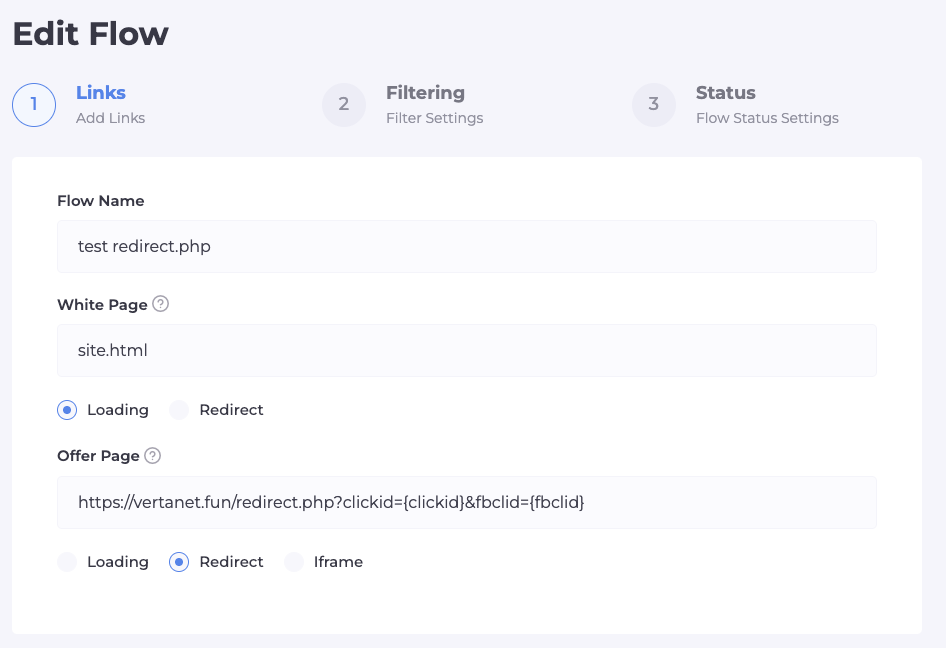
Create a flow. This is a combination of "filter rules → offer page → white page."
Connect a domain. You can use your own domain or get a ready-made one directly from the service.
Set up a white page. Some services allow you to automatically generate a secure page tailored to your niche and language, saving time on manual development.
Set up filters. Specify geolocation, devices, OS, browsers, language, ISP, VPN/Proxy rules, and click limits.
Select an integration method. There are two options:
Self-hosting. Download the integration file and upload it to your domain—suitable if you already have a well-established website with a history and don't want to part with it.
A domain within the service. Buy or park a domain directly in Cloaking.House and get a ready-made "Cloaked Link" – without any hosting at all, you can set up a flow in a couple of minutes.
Monitor statistics. Your personal account shows how much traffic went to an offer, how much was filtered, and which sources are generating suspicious traffic.
What does indexing have to do with it?
There's a point that's often overlooked when discussing cloaking: a white page isn't just a "placeholder for moderators," but a regular page on a real domain. And if this domain isn't visible in search at all, without a single page indexed and without any history, that's also a signal of sorts, and not a positive one. A fresh, "empty" domain looks more suspicious than a site the search engine has already seen and considered.
This is where it makes sense to enable indexing separately from the cloaking itself. Once a white page or flow domain is created, its pages can be immediately submitted for accelerated indexing via the Google Indexing API and IndexNow – without having to wait weeks for Google to get to the new domain. We use 2index.ninja for this: you submit a URL, and within a few hours or days, it's already indexed, along with backlinks if the domain is also being optimized for SEO.
Essentially, this is a combination of two different tasks: Cloaking.House decides which pages to show to whom and filters out unwanted traffic, while 2index.ninja ensures that the domain seen by legitimate visitors and moderators has a live and legitimate search history, rather than an empty profile without a single indexed page.
If you decide to try Cloaking.House, use promo code 2INDEX to get a 30% discount on any plan. You can use it as many times as you like, with no limit on the number of activations.
Result
Cloaking isn't "gray magic," but a viable risk management tool for any campaign that teeters on the edge of an advertising platform's rules. It doesn't guarantee an account's lifespan, but it eliminates the most common cause of bans—directly displaying an offer to a moderator. A properly configured filter + white page + offer page combination saves budget and time, and services like Cloaking.House allow you to put it all together without developing from scratch.
Previous posts