







- Main
- Cases
- Accelerated indexing of three online stores "Tea and Coffee" on OpenCart with 90%+ efficiency
Accelerated indexing of three online stores "Tea and Coffee" on OpenCart with 90%+ efficiency

In e-commerce, speed is everything. Especially when it comes to launching new projects in a highly competitive niche. Today, we will analyze a case that clearly shows how the right indexing strategy becomes the foundation for rapid growth.
We were approached by the owner of three new online stores selling tea and coffee, created in early 2024. All three sites operate on the popular OpenCart CMS, had a similar structure and a large volume of pages - about 60 thousand in total.
The client's task was ambitious: to ensure fast and maximally complete search indexing of the online store in order to get organic traffic and first sales as soon as possible. To solve this large-scale task, he chose our service, using the Red Ninja tariff.
Problem: Google's Blind Spot
Launching a new online store is always a big set of tasks. Even with perfect internal optimization and quality content, there is one factor that can ruin all efforts - time.
Search engines, especially Google, can crawl a new site for months, gradually adding pages to their index. For a business that needs to recoup its investment, such a slow start is detrimental.
The client faced a classic situation. Three of his projects were technically sound and had unique descriptions for products and categories.
However, the indexing dynamics were depressing. Googlebot rarely visited the sites, only the main pages and several main categories were indexed. Tens of thousands of product cards remained invisible for search, and therefore for potential buyers. These are classic product indexing problems that most young e-commerce projects face.
There is also a platform feature - indexing a site on OpenCart has its own nuances due to the large number of dynamically generated pages (filters, sorting) and not always the optimal URL structure by default, difficulties may arise. Without targeted actions, indexing of CMS OpenCart can drag on indefinitely.
We had a clear task: how to speed up the indexing of the store and turn 60 thousand "dead" pages into an asset that generates traffic. Waiting for the weather by the sea was not an option. An operational and technological solution was required.
Strategy and choice of instrument
Having analyzed the situation, we realized that standard methods (Sitemap, manual sending to Google Search Console) would not be enough. We needed a tool for mass and fast sending of URLs. The decisive factor was the ability to work via API, which allowed us to automate the process. The client chose our service and the Red Ninja tariff for 100 thousand pages.
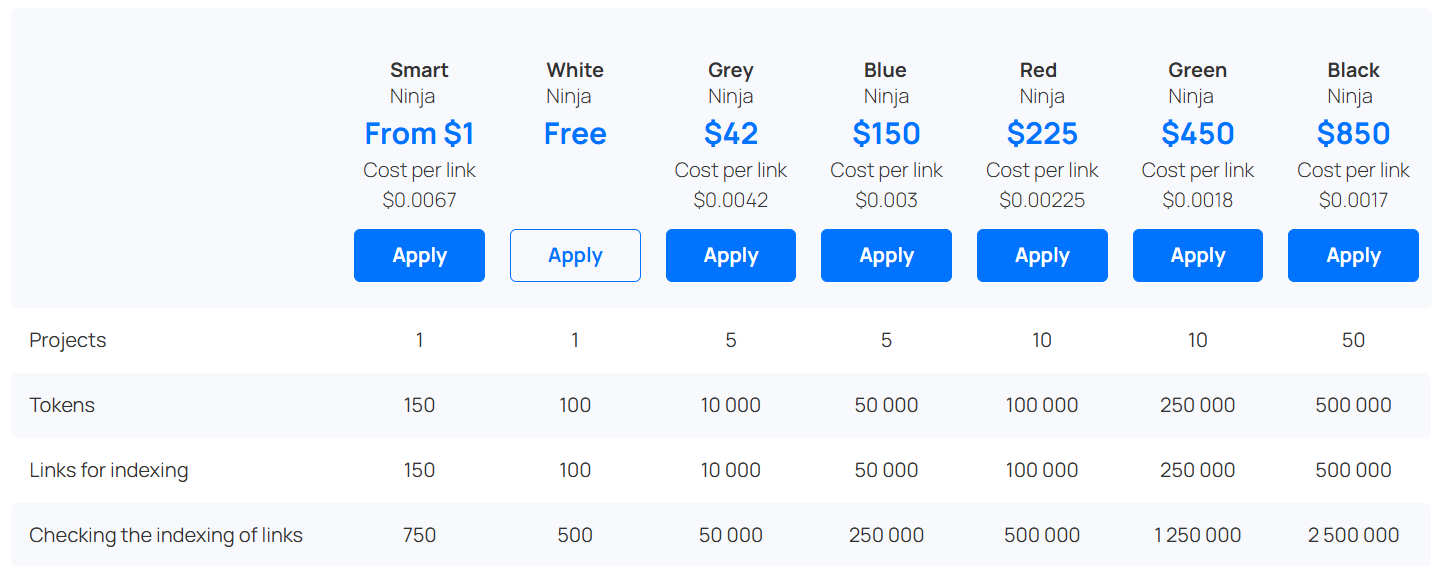
At first glance, the 100,000 page limit is excessive for the current task. However, it was a strategic decision.
Firstly, it created reserves for the future: for new goods, articles and expansion of the range.
Secondly, and no less importantly, the remaining limit was planned to be used for indexing external links, which the client had already begun to purchase to increase the authority of domains.
With a tariff cost of $225, the price for processing one page turned out to be minimal, which made the investment in fast indexing of the online store absolutely justified from the point of view of ROI.
The customer has developed the following strategy:
- Conduct an express audit of sites for technical errors that block indexing.
- Set up the download of all significant URLs from three sites.
- Integrate with 2Index.ninja via API for bulk page submission.
- Monitor the dynamics of indexing and adjust the process if necessary.
- Use the remaining limit to index purchased backlinks.
This plan was aimed at a comprehensive solution to the problem, covering not only the indexing of the online store pages, but also strengthening external SEO.
Implementation process and first results
The client got right to work. After checking robots.txt and sitemap.xml, he uploaded full lists of URLs.
Here he encountered his first small difficulty: the initial download contained several thousand service pages with filtering parameters that could create duplicates in the index. The company's SEO specialists quickly solved this problem by cleaning the lists before the main download to our service.
In total, there were about 60 thousand pages. Thanks to API integration, this entire volume was sent to the 2Index.ninja system within a few hours. This is a key advantage when working with large sites - manually sending such a number of URLs would take weeks.
The results were not long in coming. Already in the first week we saw a sharp increase in the number of indexed pages in Google Search Console. The dynamics were as follows:
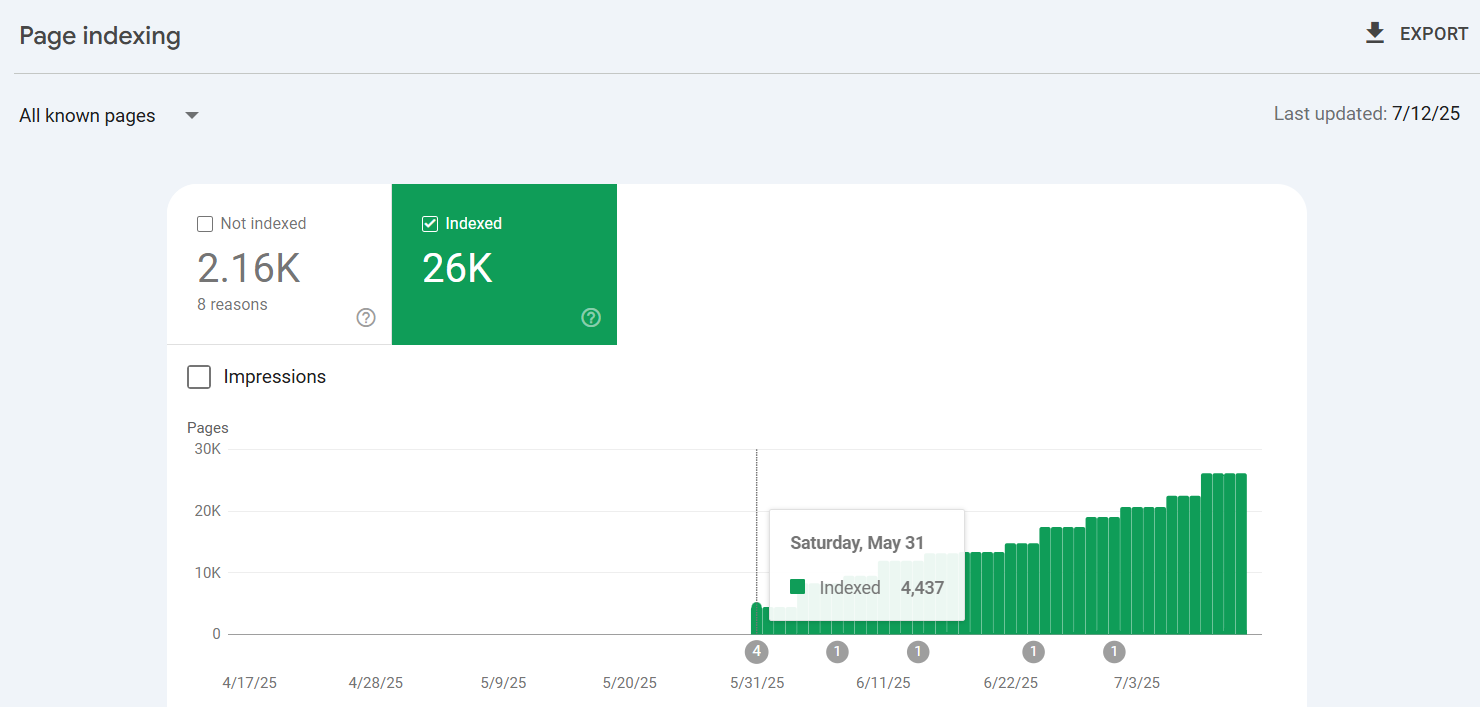
As you can see in the first graph, for the first online store, the growth curve of the number of pages in the index went up sharply. In the first month of working with the service, more than 18 thousand pages out of 20 thousand sent got into the index. This is already an efficiency of 90%.
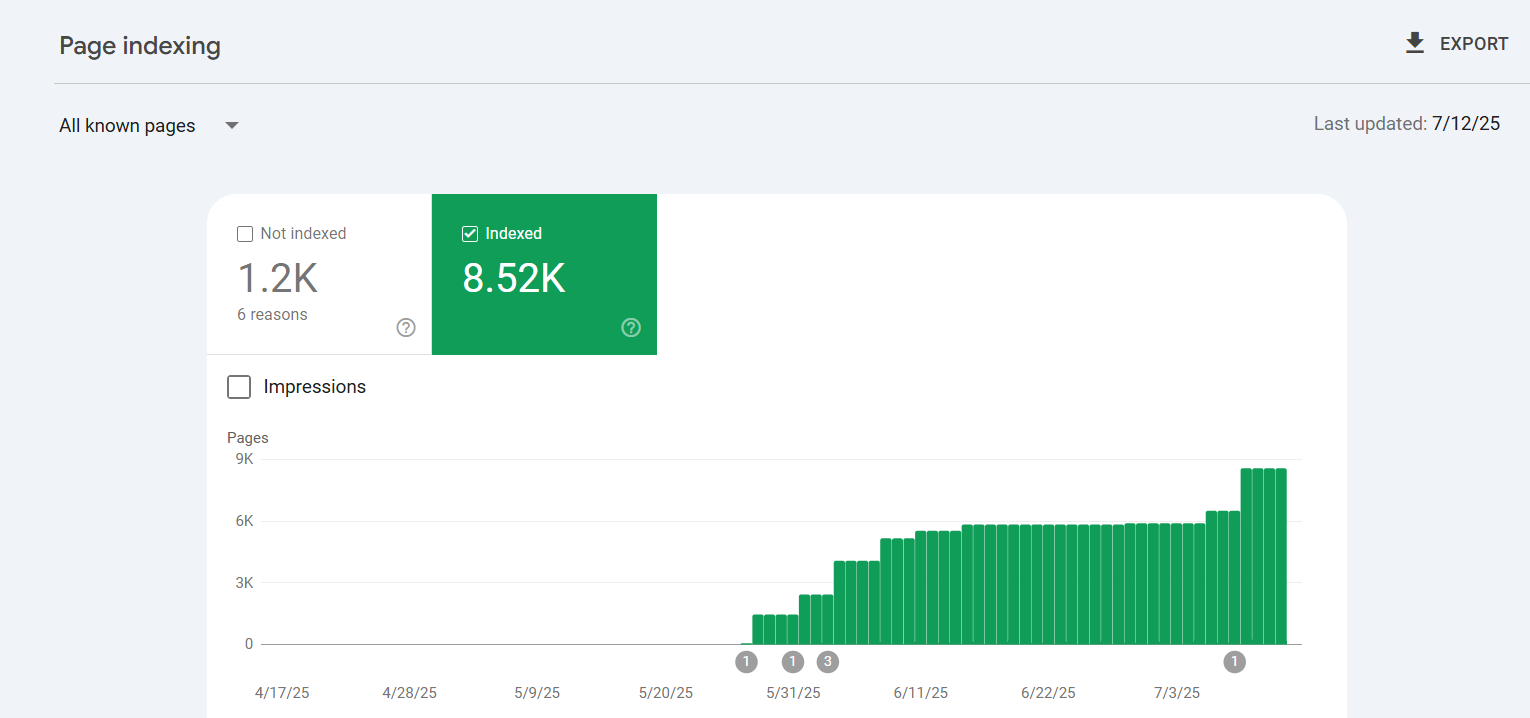
The second site showed similar dynamics. No dips - only stable growth. This proved that the process of accelerating Google's indexing of goods was put on stream and worked like clockwork.
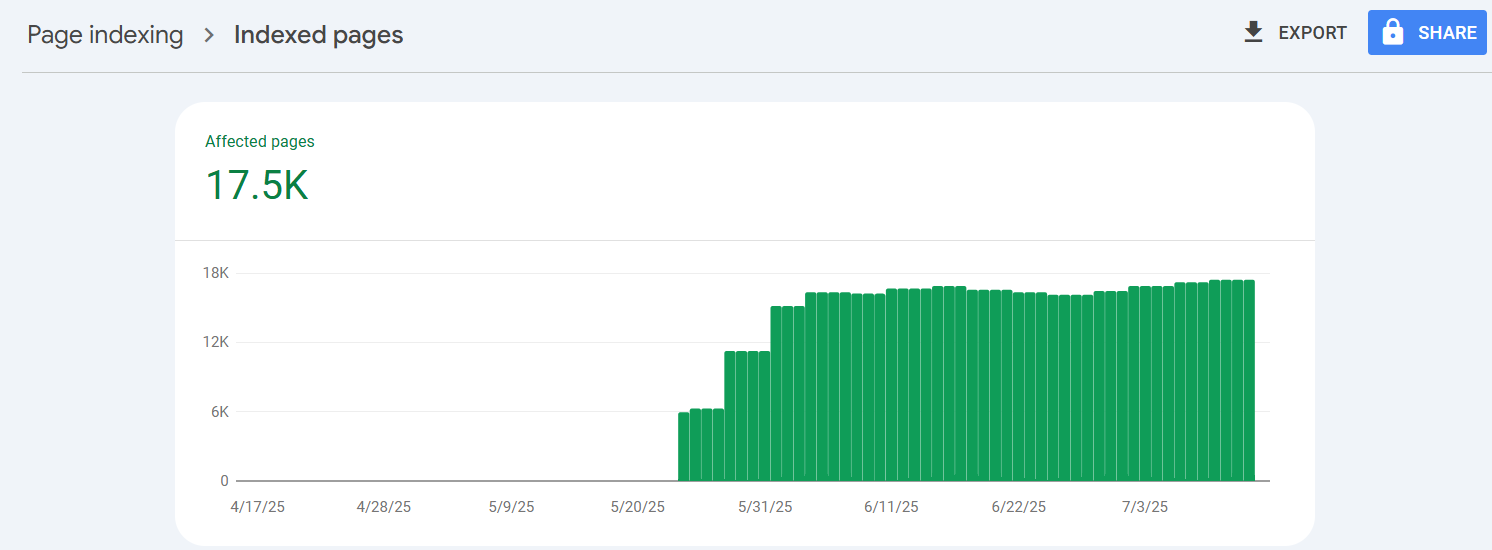
The third project confirmed the general trend. Fast and efficient indexing of e-commerce sites is a goal that can be achieved with the right approach. In total, for the three projects, we reached and exceeded the target of 90% of indexed pages. Tens of thousands of products became available for search.
Remark: Lessons from Giants
When working on indexing, it is sometimes interesting to look at the market leaders. Take Amazon, for example.
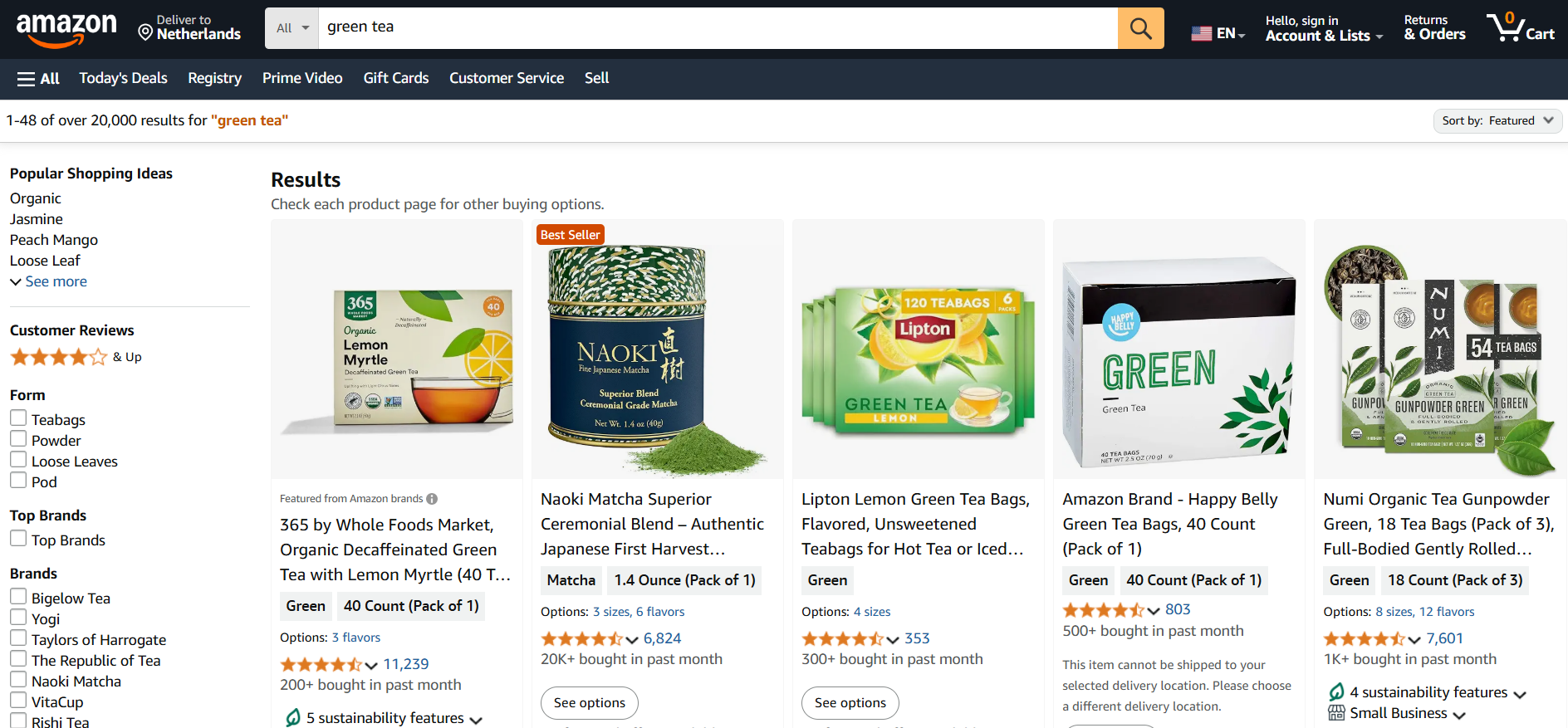
Amazon's structure is a complex mechanism with millions of pages, incredible nesting and colossal authority. Google trusts this domain unconditionally and indexes its content almost instantly.
But young sites don’t have that kind of credit. They can’t wait for the search giant to pay attention to them. This is the key difference. While Amazon can afford to experiment with structure as much as it wants, knowing that everything will be indexed, for a new online store, every page that isn’t indexed is lost profit.
It is this gap between the "giants" and the "newbies" that 2Index.ninja helps to overcome. It simplifies access to fast indexing, giving young projects a chance to attract attention. Successful OpenCart SEO indexing in our case is a direct confirmation of this.
Business Results: From Index to Traffic
The main question of any business owner: what do these numbers give me? Indexed pages are good, but where is the real return? To answer this question, it is enough to look at the search traffic growth chart of one of the projects.
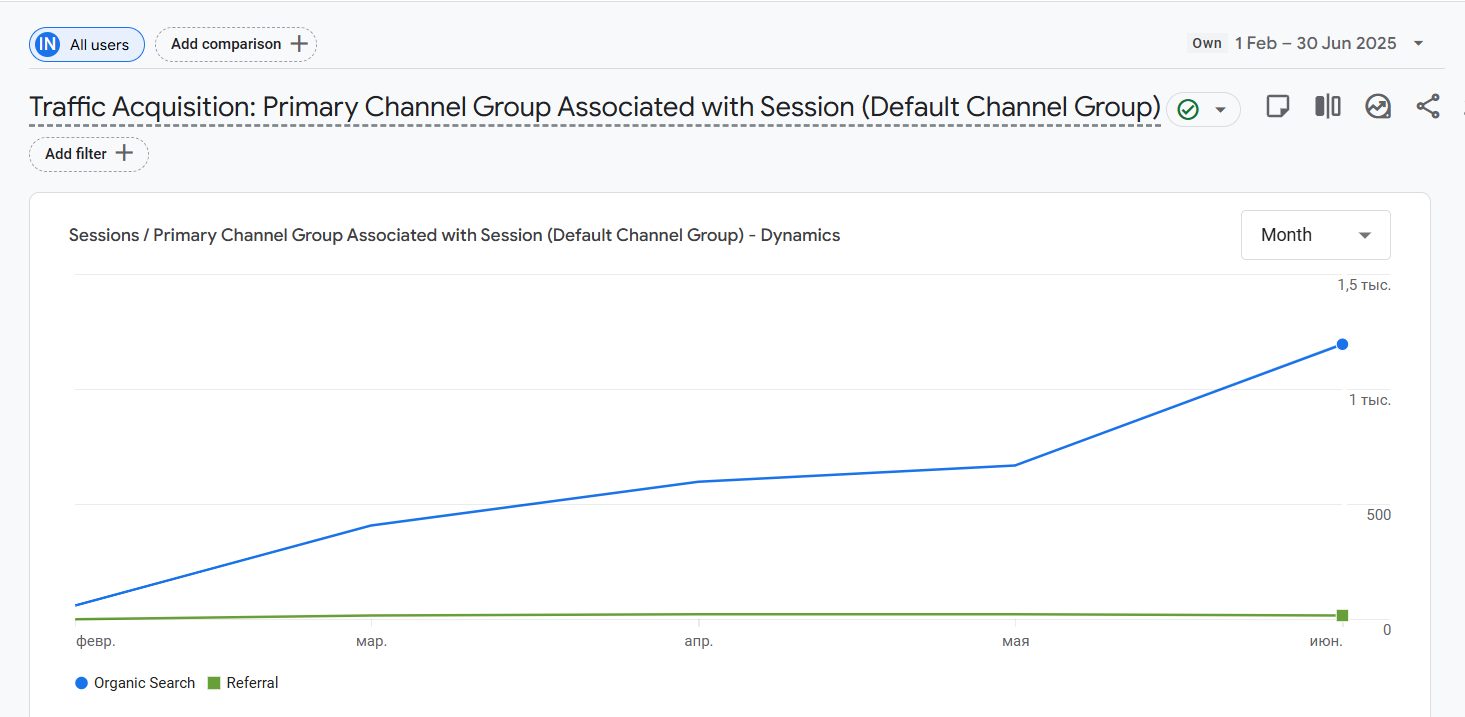
The graph from Google Search Console clearly shows a direct correlation. Before the mass indexing, organic traffic was practically zero. As soon as thousands of product pages started appearing in the search, the click and impression curve shot up. This is the final goal that the promotion of the tea and coffee website led to.
Every new indexed page is a potential entry point for a customer searching for “Ethiopian coffee beans” or “oolong green tea.” Mass indexing of products in Google has led to an explosive growth in visibility for low- and mid-frequency queries, which are the basis of e-commerce traffic.
The client received the first orders from organic search within a month after the start of work, which is extremely rare for a new project.
Bonus Round: Indexing External Links
As we mentioned earlier, the client had a significant reserve of tariff limit. It was decided to use this resource to strengthen the link profile.
Let's start with an explanation. Buying links from other resources is a standard practice in SEO to increase domain authority, but its effectiveness directly depends on whether Google indexes the donor page. A link from an unindexed page does not transfer weight, and buying it is a waste of money.
We conducted an experiment: we sent a test batch of 1000 purchased external links for indexing.
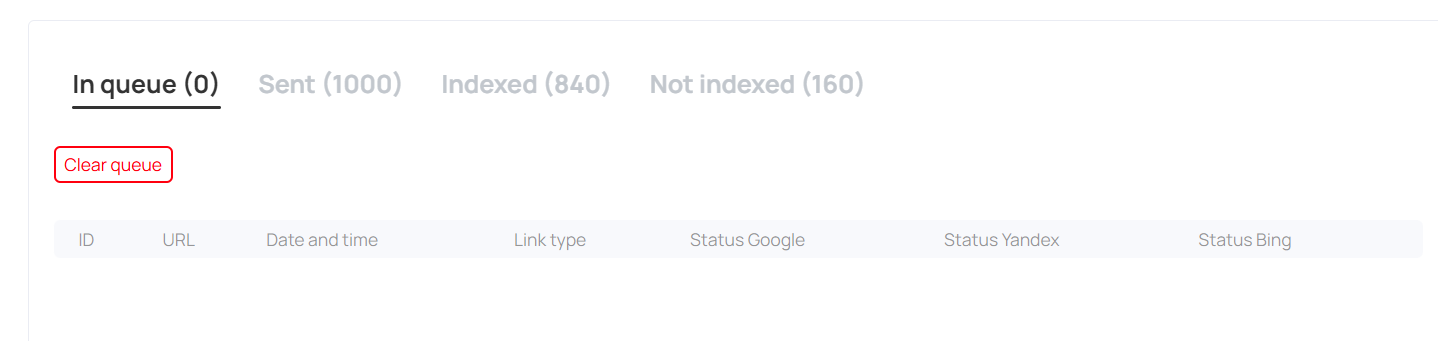
The service showed 84% efficiency for backlink indexing. This means that 840 out of 1000 purchased links started working and transferring weight to promoted sites. Fine work!
It turns out that we not only accelerated the indexation of the online store, but also increased the return on investment in link building. And this is critically important for a long-term promotion strategy. Especially for young projects.
Conclusion and findings
The case shows how a technological approach to indexing can radically change the fate of a new e-commerce project.
Let's sum it up:
- Indexing has been accelerated. The problem of slow indexing of three new online stores on OpenCart has been completely solved.
- High efficiency. The indexing efficiency bar of over 90% for 60 thousand pages was reached and maintained.
- Rapid Traffic Growth: Mass indexing has resulted in rapid and measurable growth in organic search traffic.
- Increased ROI. Investments in the Red Ninja tariff paid off due to a quick start of sales and effective indexing of not only website pages, but also external links.
For any e-commerce project, time is the most valuable resource. Waiting for natural indexing of online store pages is an unaffordable luxury. 2Index.ninja takes control of the process, forces the appearance of the site in the search. As a result, the entrepreneur receives profit from his efforts faster.
This case proves that competent and fast indexing of an online store directly affects profit growth.